
Signs of a Failing Dental Implant — and What to Do
Bleeding gums, a bad taste, pain when biting or an implant that moves: what each sign means, when it's urgent and what to do to save the implant.
Written by the team of Dr. Jesara López · Dental Surgeon (UABC) · Mexicali, B.C.
Updated:
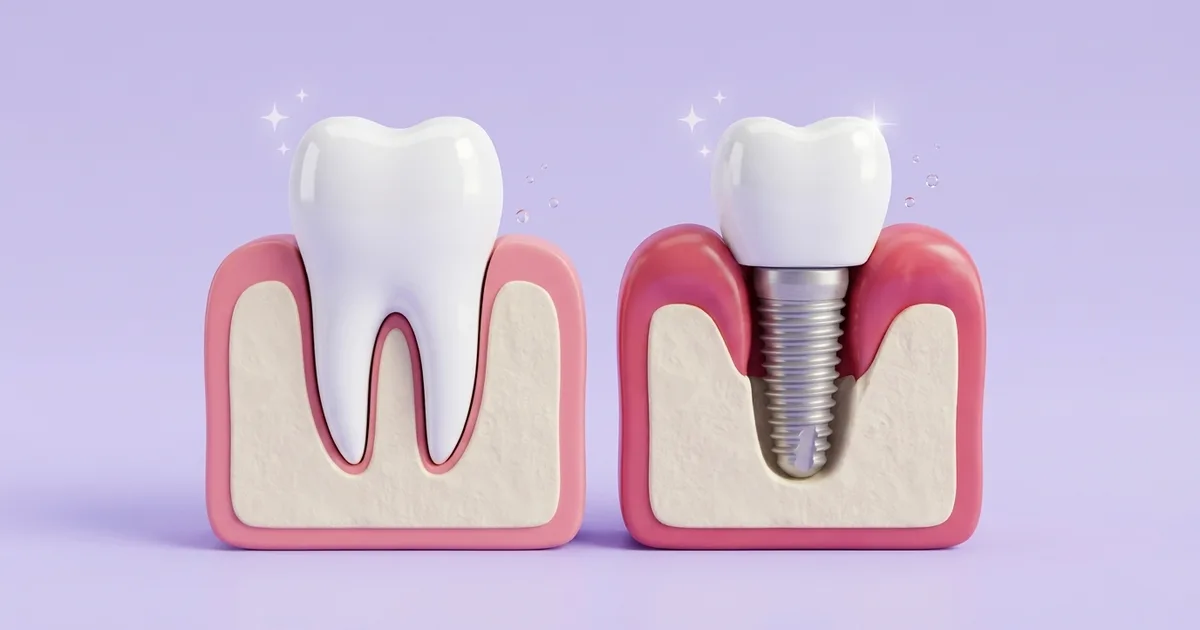
The most common sign that an implant is in trouble is red, swollen or bleeding gum around it. The more serious ones are an implant that moves, pus, or a bad taste that won’t go away in that spot. The key thing to know: infection around an implant can progress without pain, so don’t wait for it to hurt. Caught early, an implant can often be saved.
Two different moments: right after surgery and years later
An implant can run into problems at two stages, and the warning signs are not the same.
The first weeks after surgery
Swelling is normal (it peaks on day 2 or 3), so is bruising, and the first week is uncomfortable. According to our dental implant aftercare guide, what is not normal — contact us:
- Bleeding that won’t stop after 45–60 minutes of firm pressure with gauze.
- Intense pain that doesn’t respond to the prescribed medication.
- Fever above 100.4 °F (38 °C).
- Swelling that keeps growing after day 4.
- The implant feels loose or moves.
- Numbness of the lip, chin or tongue that doesn’t improve 8–12 hours after the anesthesia.
- Pus or a persistent bad taste.
At this stage the implant is still fusing with the bone (that takes 3 to 6 months). If it doesn’t integrate, it’s removed, the bone is allowed to heal, and another implant can usually be tried.
Months or years later: peri-implantitis
Once the crown is on, the main risk is peri-implantitis: an infection of the gum and bone around the implant. It starts as mucositis, a gum inflammation that is still reversible. Left alone, it can slowly destroy the bone that holds the implant.
Unlike a natural tooth, an implant has no ligament to “warn” you with pain. That’s why the 6-month check-ups matter: we measure the gum around the implant and, when needed, take an X-ray to see the bone level.
The signs, from mild to serious
| Sign | What it may be | What to do |
|---|---|---|
| Gum that’s red or bleeds when brushing | Mucositis (reversible inflammation) | Step up home care and book a check-up soon |
| Food trapped or bad smell in the area | Gap between crown and tooth, plaque buildup | Check-up; may need an adjustment |
| The crown moves | Loose screw or failed cement | Don’t chew on that side; book soon |
| Pain when biting | Infection, screw or a damaged part | Check-up within days |
| Gum receding, metal showing | Gum or bone loss | Check-up with X-ray |
| Pus or persistent bad taste | Active infection | Message us the same day |
| The implant itself (not the crown) moves | Lost bond with the bone | Urgent |
Most of these match the warning signs in our implant prosthesis care guide.
What to do if you notice something
- Don’t ignore it or wait for your next cleaning. The earlier it’s treated, the more options there are.
- Send us a photo by WhatsApp with what you feel and since when. Our front desk answers in English, and we’ll tell you whether you need to come in soon or it can wait for a regular visit — useful when you live on the other side of the border.
- Don’t start antibiotics on your own. They can mask the symptoms without fixing the cause.
- If the crown is loose, don’t chew on it, so you don’t stress the implant or swallow the screw.
- Keep cleaning the area gently. Skipping the brush because it bleeds makes the inflammation worse.
- If you have a high fever, swelling that spreads to your face or neck, or trouble swallowing or breathing, get care right away where you are — don’t wait to cross.
How it’s treated
It depends on how advanced it is, and the doctor decides at your exam:
- Mild inflammation (mucositis): professional cleaning with implant-safe instruments, a rinse, and fine-tuning your home care.
- Crown or screw problem: re-tighten or replace the screw, adjust the bite or replace the crown. The implant stays.
- Peri-implantitis with bone loss: deeper cleaning around the implant and, depending on the case, procedures to treat the bone.
- An implant that can’t be saved: it’s removed, the bone heals, and then we evaluate placing a new one, sometimes with a bone graft.
How to keep it from happening
- Daily hygiene with Super Floss, an interdental brush and a water flosser around the implant.
- Check-up and cleaning every 6 months (every 3–4 months if you smoke, have diabetes or had gum disease).
- No smoking — tobacco is the main cause of implant failure.
- A night guard if you clench or grind.
- Tell us about any change as soon as you notice it.
It also helps to know how long implants last and when the crown needs replacing.
At our office in Mexicali
Implants are placed and followed up by Dr. Fidel Machado, a specialist in implantology and prosthodontics, who sees patients mainly on Saturdays. Our team also includes a periodontist (gum specialist), Dr. Adilene Rivera, in the same office. If there’s room in the schedule, we can see you the same day. We’re about 3 miles from the Calexico West crossing.
If you need treatment, we send you a written plan by WhatsApp with the cost of each part before anything is done, and your aftercare guide in English afterward. You can pay in U.S. dollars. See our list prices on the price list and more about how we work in dental implants in Mexicali.
Frequently asked questions
Can an implant fail years after it was placed?
Yes. The most common long-term cause is peri-implantitis, an infection of the gum and bone around the implant, linked mainly to hygiene, smoking and skipped check-ups.
My implant crown is loose — did I lose the implant?
Not necessarily. Often it's the crown screw that came loose, and we fix it in the office by re-tightening it. Avoid chewing on that side and let us know soon.
I'm back home in the US and something feels wrong. What should I do?
Send us a photo and a short description by WhatsApp — our front desk answers in English. We'll tell you whether it needs a visit soon or can wait. If you have a high fever, spreading swelling or trouble swallowing, go to urgent care where you are.
Can you check an implant that another dentist placed?
Yes. Bring X-rays or any information about the implant you have; the doctor will tell you at your exam what can be done, and you'll get the plan in writing.