
Wisdom Teeth: Do They Have to Come Out If They Don't Hurt?
Not every wisdom tooth needs to come out. When removal makes sense even without pain, when they can be watched, and what to do if they're impacted or crooked.
Written by the team of Dr. Jesara López · Dental Surgeon (UABC) · Mexicali, B.C.
Updated:
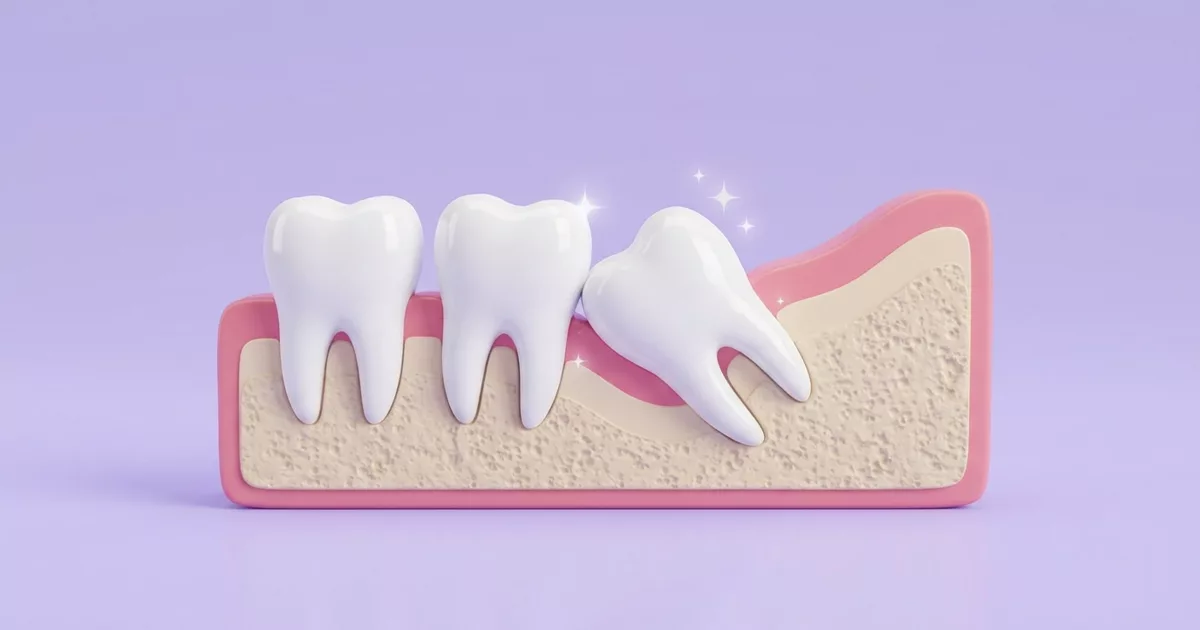
Not every wisdom tooth has to come out. If yours came in fully and straight, bite against the opposing tooth and are easy to clean, they often stay and are just monitored. Removal makes sense when they hurt or get inflamed, come in crooked or stay trapped in the bone, have decay that can’t be fixed, or are damaging the molar next to them. “It doesn’t hurt” is not the same as “it’s fine” — an oral surgeon makes the call at your exam, based on your X-rays and your mouth.
Why wisdom teeth cause so much trouble
Wisdom teeth (third molars) are the last teeth to come in, at the very back of the mouth, usually in the late teens or early twenties. Because they arrive last, there often isn’t enough room, so they can end up:
- Impacted — trapped in the bone or under the gum, never fully erupting.
- Partly erupted — with a flap of gum over part of the tooth that traps food.
- Tilted — leaning into the molar next to them or toward the cheek.
None of these is an emergency by itself, but they are the situations that most often lead to pain, infection or decay that is hard to clean.
Signs it’s time to take them out
- Pain or pressure at the back of your mouth that comes and goes.
- Red, swollen gum or a bad taste around a partly erupted tooth.
- Decay in the wisdom tooth or in the molar in front of it, where a toothbrush barely reaches.
- Food getting stuck in the same spot every time.
- Trouble opening your mouth fully or swelling in the cheek on that side.
- Your dentist tells you the tooth is pushing on or damaging the molar next to it.
If swelling keeps growing, you run a fever or can’t open your mouth, message us soon. Sometimes the infection has to be brought under control before the tooth comes out; the doctor decides that.
When they can stay
- They came in fully and straight.
- They bite against the tooth above or below and help you chew.
- You can brush and floss them like any other tooth.
- There’s no decay and the gum around them doesn’t flare up.
In that case they’re checked at your routine visits, and the plan changes only if something changes.
Impacted or crooked wisdom teeth
A wisdom tooth that never came in or is tilted doesn’t always have to come out right away, but it’s the one we watch most closely. Taking it out is usually a surgical extraction: the surgeon opens the gum and sometimes divides the tooth into pieces so it comes out with less stress on the bone. We explain the difference in simple vs. surgical extraction.
When a tooth sits close to delicate structures or in a tricky position, the surgeon walks you through what they see and why. There’s no single rule; it depends on how the tooth is positioned in your case.
Can all four come out at once?
It depends. Some people have several removed at the same visit; for others it makes more sense to do one side at a time so they can chew on the other side while healing. The surgeon decides based on each tooth’s position and how you’re doing. What we see consistently is that each extraction is almost always finished in a single visit — 1.2 visits per patient on average in 2026 — which matters if you’re driving down from the Imperial Valley.
What happens if they should come out and don’t
- The gum around them can flare up again and again.
- The molar in front can develop decay where it touches the wisdom tooth — hard to see and hard to clean.
- An infection left to spread can swell your face and make treatment more complicated.
That’s why an exam is worth it even when nothing hurts.
Questions that help you decide
- Did the tooth come in fully, and can you clean it? If so, it often stays and is simply watched.
- Does the gum at the back flare up every so often? That’s one of the most common reasons to remove it, even if it’s quiet in between.
- Is the molar next to it healthy? If your dentist sees decay between the two, waiting usually makes things harder.
- When does it suit you? If there will be a few days of swelling, schedule around a quieter week instead of waiting for it to hurt at the worst moment.
- One or several? Ask the surgeon whether doing them together or one side at a time makes more sense for you.
Bring your X-rays from your US dentist, or send them by WhatsApp ahead of time; they help the surgeon see each tooth’s position before you make the trip.
Coming from the US
Extractions are the treatment that brings the most cross-border patients to our office: in 2026, 37 % of our extraction appointments were for patients with a US phone number, most of them from the Imperial Valley. A few practical points:
- Read the pre-anesthesia instructions before your visit. With local anesthesia, eat something light 2–3 hours before, tell us about your medications and don’t stop any of them on your own. With simple local anesthesia you can come alone and drive yourself back.
- Your tooth extraction aftercare guide arrives on WhatsApp, in English: gauze pressure, cold on the cheek, no straws or spitting, soft food.
- Wondering how much time to take off? See time off after a tooth extraction. The best-known complication is covered in dry socket.
At our office in Mexicali
- Our team includes 5 oral surgeons. In 2026, 3 out of 4 extractions were done by an oral surgeon; simpler ones are also done by Dr. Jesara López and our general dentists.
- Extraction and surgery appointments are 60 minutes.
- After your exam you get a written plan on WhatsApp with the cost of each extraction, and nothing is done until you approve it. Reference prices are on our price list.
- Pay in US dollars or pesos, cash or card. Our front desk answers in English on WhatsApp at the same number you’d call from the US.
- We’re open Monday to Saturday (Pacific time, same as Calexico), about 3 miles from the downtown crossing, and we can often see you the same day if there’s room.
Learn more on our tooth extraction in Mexicali page.
Frequently asked questions
My dentist in the US said my wisdom teeth should come out. Can you check?
Yes. Send your X-rays by WhatsApp or bring them to your exam. The oral surgeon reviews each tooth and you get a written plan with the cost of each extraction before anything is done.
My wisdom tooth came in straight and doesn't bother me. Does it still need to go?
Not necessarily. If it came in fully, bites against the tooth above or below and you can clean it, it often stays and is simply checked at your regular visits.
Can I wait until it hurts?
You can, but it isn't always the best plan: by the time it hurts there is often an infection or swollen gum, and sometimes that has to be calmed down first. Deciding before the pain gives you more room to plan your trip.
What does the exam with the surgeon cost?
A specialist consultation is $800 MXN (≈ USD 48) and a general exam is $500 MXN (≈ USD 30). You can pay in US dollars, cash or card.
What if my wisdom tooth is only partly out?
Those cause the most trouble: the flap of gum over it traps food and gets inflamed easily. It isn't urgent if it doesn't hurt, but it's worth having the surgeon look at it.