
Dry Socket After a Tooth Extraction: How to Tell and What to Do
Dry socket happens when the blood clot is lost after an extraction: severe pain 2 to 4 days later. How to tell it from normal soreness and what to do about it.
Written by the team of Dr. Jesara López · Dental Surgeon (UABC) · Mexicali, B.C.
Updated:
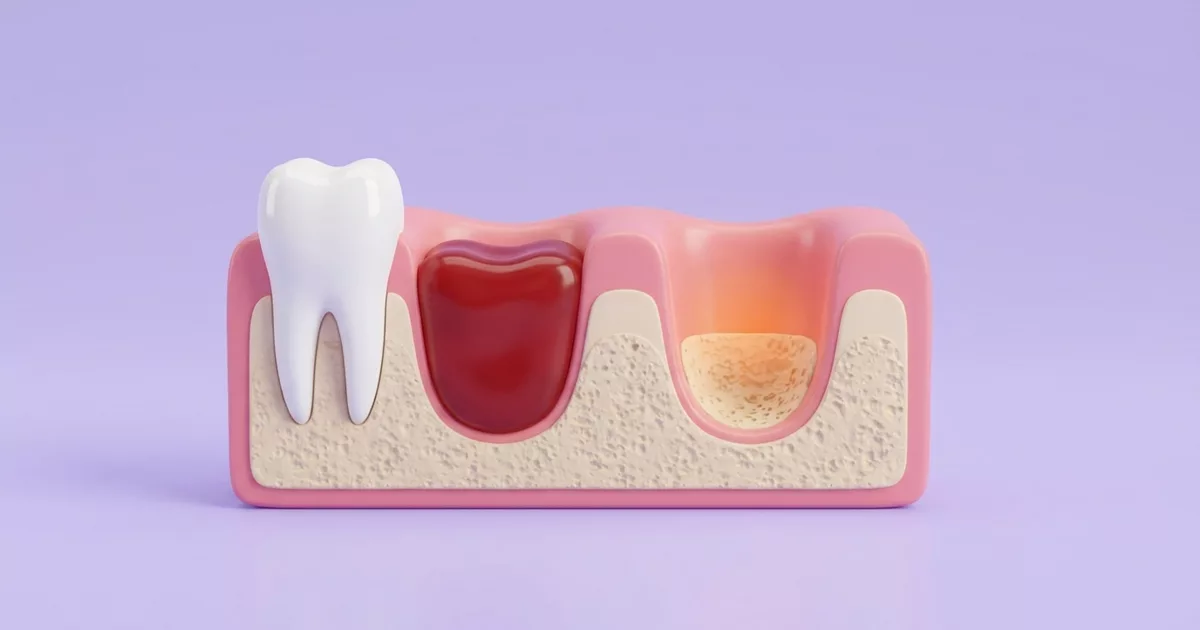
Dry socket is what happens when the blood clot that forms in the extraction site comes loose or doesn’t form properly. The bone is left exposed, and severe pain shows up between day 2 and day 4 — right when the soreness should be easing. That’s the key to telling it apart: normal soreness gets a little better each day; dry socket pain gets worse and often spreads toward the ear or neck. If it happens to you, message us: the doctor checks the area and decides how to treat it.
What the clot does
When a tooth is removed, the socket fills with blood that clots. That clot works like a natural bandage: it covers the bone, protects the nerve endings, and gives the gum something to heal over.
If the clot is lost too early, the bone is left uncovered. That’s a dry socket, and it’s why it hurts so much.
Symptoms
- Severe pain starting 2 to 4 days after the extraction, after it seemed to be getting better.
- Pain that spreads to the ear, temple or neck on the same side.
- A bad taste or bad breath that won’t go away.
- When you look at the socket, instead of a dark clot you may see an empty hole or white bone.
- Your prescribed pain medication no longer keeps up with the pain.
Normal soreness vs. dry socket
| Normal soreness | Dry socket | |
|---|---|---|
| When it’s worst | The first 1 or 2 days | Starts or worsens between day 2 and day 4 |
| Trend | A little better every day | Gets worse instead of better |
| Where you feel it | Around the extraction site | Spreads to the ear or neck |
| What the socket looks like | Dark clot in place | Empty, or white bone visible |
| With pain medication | Under control | Not enough |
Keep in mind that swelling does normally build for the first few days and peaks around day 3 or 4. What should worry you is pain that keeps climbing, not swelling on its own. The full timeline is in how much time off you need after an extraction.
What causes it
Almost everything that causes it comes down to pressure or suction on the clot in the first few days:
- Spitting forcefully.
- Drinking through a straw.
- Smoking: the suction can pull the clot out.
- Rinsing hard, especially in the first 24 hours.
- Touching the socket with your tongue or fingers.
Wisdom teeth and surgical extractions, where more work is done in the area, call for extra care with the clot.
How to prevent it
The most effective thing is to follow the first-days instructions:
- Bite on the gauze with firm pressure for 30 to 45 minutes after you leave.
- Don’t spit, don’t use a straw, don’t rinse hard.
- Don’t smoke for at least 5 days.
- No alcohol, and no strenuous exercise for the first 48 hours.
- Eat soft, cool or lukewarm food on the other side.
- Don’t brush the area on day 1; on day 2, brush near it gently.
- Skip aspirin: it makes clotting harder.
Everything is laid out in our tooth extraction aftercare guide, which we send you on WhatsApp after the appointment. If you smoke, plan the days off cigarettes ahead of time, and read the pre-anesthesia instructions before you come.
What to do if you think you have it
- Message us on WhatsApp or call. Tell us when the extraction was and what the pain is like.
- Don’t self-medicate with aspirin or switch medications on your own.
- Don’t put anything in the socket to “clean” it.
- Come in to have it checked. The doctor examines the area and decides the treatment. In general, the socket is gently cleaned and protected so the bone is no longer exposed, which usually brings a lot of relief.
Until you’re seen
Until the doctor checks the area, these steps help keep it from getting worse:
- Take your prescribed pain medication on schedule, without skipping doses or switching it on your own.
- Stick to soft food, lukewarm or cool, and chew on the other side.
- Still no smoking, straws or spitting. Even if the clot is gone, suction and pressure irritate the area more.
- Keep the rest of your mouth clean gently; don’t scrub the socket.
- Sleep with your head slightly raised, like the first few nights.
Write down when the pain started and how it has changed: it helps the doctor understand what’s going on.
Can it happen after any extraction?
It can follow any extraction, but it isn’t the expected outcome: in most cases the clot stays in place and the gum closes normally. Taking care of the first few days is what’s most in your hands.
If you’re already back in the U.S.
About a third of our extraction patients cross from the U.S. (in 2026, 37 % of extraction appointments were for patients with a U.S. phone number), so this comes up:
- Message us on WhatsApp at the same number, +52 686 203 1211. Our front desk replies in English. Tell us the date of the extraction and describe the pain; a photo of the area can help.
- If there’s room in the schedule, we can see you the same day. We’re on Pacific Time, about 3 miles from the downtown Calexico crossing, open Monday to Saturday.
- If it can’t wait — severe pain you can’t control, fever, swelling that keeps growing, or trouble opening your mouth or swallowing — get seen wherever is closest.
At our office in Mexicali
- Our team includes 5 oral surgeons, who did 3 out of 4 extractions in 2026. Simple extractions are also done by Dr. Jesara López and our general dentistry team.
- Most extractions take a single visit, and you leave with your aftercare guide on WhatsApp in English or Spanish.
- You get a written plan before anything starts, and you can pay in U.S. dollars, cash or card.
Learn more about tooth extraction in Mexicali. If you’re planning to replace the tooth, read replacing a tooth after an extraction.
Frequently asked questions
Is dry socket an infection?
Not exactly. It's the loss of the clot that protects the bone, which leaves the area exposed and painful. It can come with a bad taste or smell. If you also have a fever or growing swelling, let us know, because that can point to an infection.
Will it go away on its own?
The area does heal with time, but the pain can be very intense in the meantime. It's best to have the doctor check it: cleaning and protecting the area usually brings a lot of relief.
Can I take aspirin for the pain?
No. Aspirin makes clotting harder. Take the pain medication you were prescribed, and if it isn't enough, message us instead of switching medications on your own.
I'm back in California and I think I have it. What do I do?
Message us on WhatsApp at the same number with when the extraction was and how the pain feels. If the pain is severe or comes with fever or growing swelling and you can't come in, get seen near you.
It's been a week and I feel fine. Can I still get it?
It's much less likely. Dry socket usually shows up between day 2 and day 4. If you're improving by the second week, the gum should keep healing normally.