
Cavities in Baby Teeth: Do They Need to Be Treated?
Baby teeth do need treatment: they hold space for adult teeth. Your options depending on how deep the cavity is, and the warning signs to watch for at home.
Written by the team of Dr. Jesara López · Dental Surgeon (UABC) · Mexicali, B.C.
Updated:
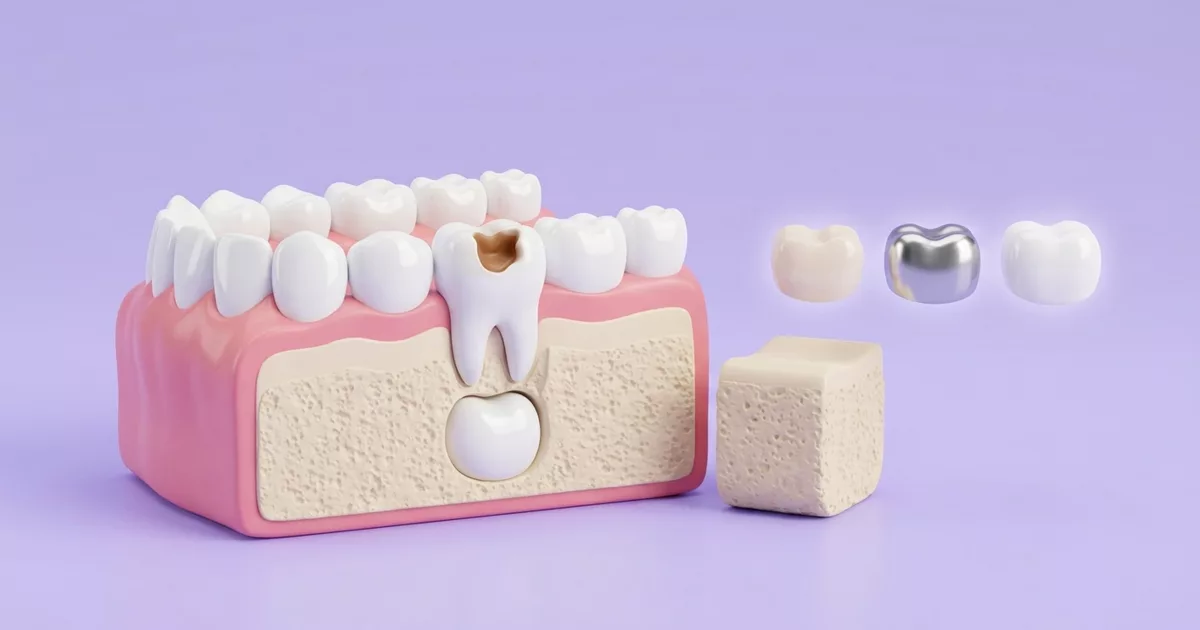
Yes, cavities in baby teeth should be treated. Even though those teeth will fall out, right now they help your child chew, speak and hold the space where the adult tooth will come in. An untreated cavity hurts, gets infected and can damage the adult tooth developing underneath. Treatment depends on how deep the decay goes: from a small filling to a pediatric crown or, if the tooth can’t be saved, an extraction with a space maintainer. Our pediatric dentist decides after examining your child.
Why waiting for the tooth to fall out isn’t a plan
A lot of parents think, “It’s going to fall out anyway — why fix it?” The problem is timing. Some baby molars stay in the mouth until age 10 or 12, and a cavity moves much faster than that.
If it’s left alone:
- It hurts. Kids eat poorly, sleep poorly and may avoid chewing on that side.
- It gets infected. The infection can form a small pimple on the gum or make the face swell.
- It can harm the adult tooth forming right below it.
- Space gets lost. If the tooth falls out or has to be pulled early, the neighbors drift and the adult tooth can come in crooked.
Warning signs you can check at home
Look at your child’s teeth in good light, especially the back molars:
- Chalky white spots near the gum line — the earliest stage.
- Brown or black spots, or tiny holes in the molars.
- Pain with sweets, cold or hot food.
- Chewing on one side only, or suddenly refusing a food they used to like.
- Bad breath that brushing doesn’t fix.
- A bump on the gum or a swollen face — message us soon if you see this.
Many small cavities show no signs at all, which is why the 6-month check-up matters.
Treatment options, by how deep the cavity is
| How far it’s gone | What’s usually done | In plain words |
|---|---|---|
| Small cavity | Kids’ tooth-colored filling or glass ionomer | Decay is cleaned out and the tooth is filled |
| A cavity worth stopping | Silver diamine fluoride | A liquid that halts decay; it leaves the area dark |
| Reached the nerve | Pulpotomy or pulpectomy | The baby tooth’s nerve is treated to save it |
| Badly broken down | Pediatric crown | A cap that covers the whole tooth |
| Can’t be saved | Kids’ extraction | Plus a space maintainer if needed |
Prices for each option are in the Quick Facts above and on our price list.
Filling or glass ionomer
For a small cavity, the decayed part is removed and the tooth is filled with a tooth-colored material. It’s the simplest fix. Afterward you’ll get our kids’ filling care guide by WhatsApp.
Silver diamine fluoride
This liquid is brushed onto a cavity to stop it from growing. It generally turns the decayed part dark, so it’s mostly used on back teeth or to hold a cavity in place while another treatment is planned. Our pediatric dentist will tell you whether it’s a good fit for your child.
Pulpotomy or pulpectomy
When decay reaches the nerve, the baby tooth’s nerve is treated so the tooth doesn’t have to come out. A pulpotomy treats the top part of the nerve; a pulpectomy treats all of it. A crown usually follows. See our pulpotomy and pulpectomy aftercare guide.
Pediatric crown
If the tooth is badly broken down, it gets a crown. We offer three types: stainless steel, the toughest; tooth-colored resin; and zirconia, also white. The crown comes out with the baby tooth when the adult tooth arrives. Care tips are in our pediatric crown guide.
Extraction and space maintainer
If the tooth can’t be saved, it’s removed. When the adult tooth is still years away, a space maintainer keeps the neighboring teeth from drifting into the gap. We have guides for kids’ extractions and space maintainers.
How to prevent the next one
- A check-up and cleaning every 6 months, so cavities are caught while they’re small.
- Sealants on the permanent molars, around ages 6 and 12. More in dental sealants for kids.
- Brushing with an adult’s help, especially at night.
- Fewer sweets and juice between meals, and no falling asleep with a bottle of milk or juice.
Coming from Calexico or the Imperial Valley
About one in four of our pediatric appointments in 2026 were for families with a US phone number. Our office is about 3 miles from the downtown Calexico crossing, and we work on Pacific time, same as Calexico. Message us on WhatsApp at +52 686 203 1211 — the same number works from the US, and our front desk replies in English. Ask us to group treatments into as few visits as your child can comfortably handle.
At our office in Mexicali
- Kids are seen by our pediatric dentists, Dr. Alicia Ojeda and Dr. Nashla Ruiz. We see children from age 2.
- From January to September 2026 we saw 52 children across 105 visits — mostly exams, cleanings, fillings and stainless steel crowns.
- After the exam we explain what we found and give you a written plan with priorities and the cost of each treatment. Nothing is done until you approve it.
- After each treatment you get the aftercare guide by WhatsApp, in English.
- Pay in pesos or US dollars, cash or card. We’re open Monday to Saturday.
If your child is scared of the dentist, read how to help a child who’s afraid of the dentist. If they haven’t had a first check-up yet, start with your child’s first dental visit. See how we work on our pediatric dentist in Mexicali page.
Frequently asked questions
My child never complains of pain. Could they still have cavities?
Yes. Small cavities rarely hurt; pain usually shows up once the decay is close to the nerve. That's why check-ups every 6 months catch cavities you can't see at home.
What's the dark spot on my child's tooth after the visit?
It may be silver diamine fluoride, a liquid used to stop a cavity from growing. It generally turns the decayed area dark. Our pediatric dentist will tell you at the appointment if it was used and why.
Is a stainless steel crown permanent?
No. It goes on a baby tooth and comes out with it when the adult tooth arrives. Its job is to protect that tooth for as long as your child needs it.
We live in the US. Can several cavities be treated in one trip?
It depends on how many teeth and how deep the cavities are. Our pediatric dentist builds a plan with priorities and splits it into short visits so your child doesn't get worn out. In 2026 kids came to about 2 visits on average; we'll tell you the plan in writing before you book the rest.
How much is a check-up to find out if my child has cavities?
A general exam is $500 MXN (≈ USD 30) and a specialist exam is $800 MXN (≈ USD 48). You then get a written plan with the cost of each treatment before anything starts.